Standards, expert consensus and principles that can be checked.
Light · Sound · Scent · The nervous system Design / Evidence / Measurement / Boundaries
The room is part
of your day.
Light reaches the eyes, sound competes for attention, and scent connects with memory and emotion. We connect environmental design with research while distinguishing what studies suggest, what hardware provides and what still needs product-specific evidence.
The sensory environment
Look beyond the lamp.
Look beyond the lamp.
Stay within the evidence.
Harlowelife begins with time-aware task light and explores how the surrounding environment relates to transitions, attention, memory and personal routines. These are environmental inputs, not interchangeable treatments.
01 · Sound and neuroscience
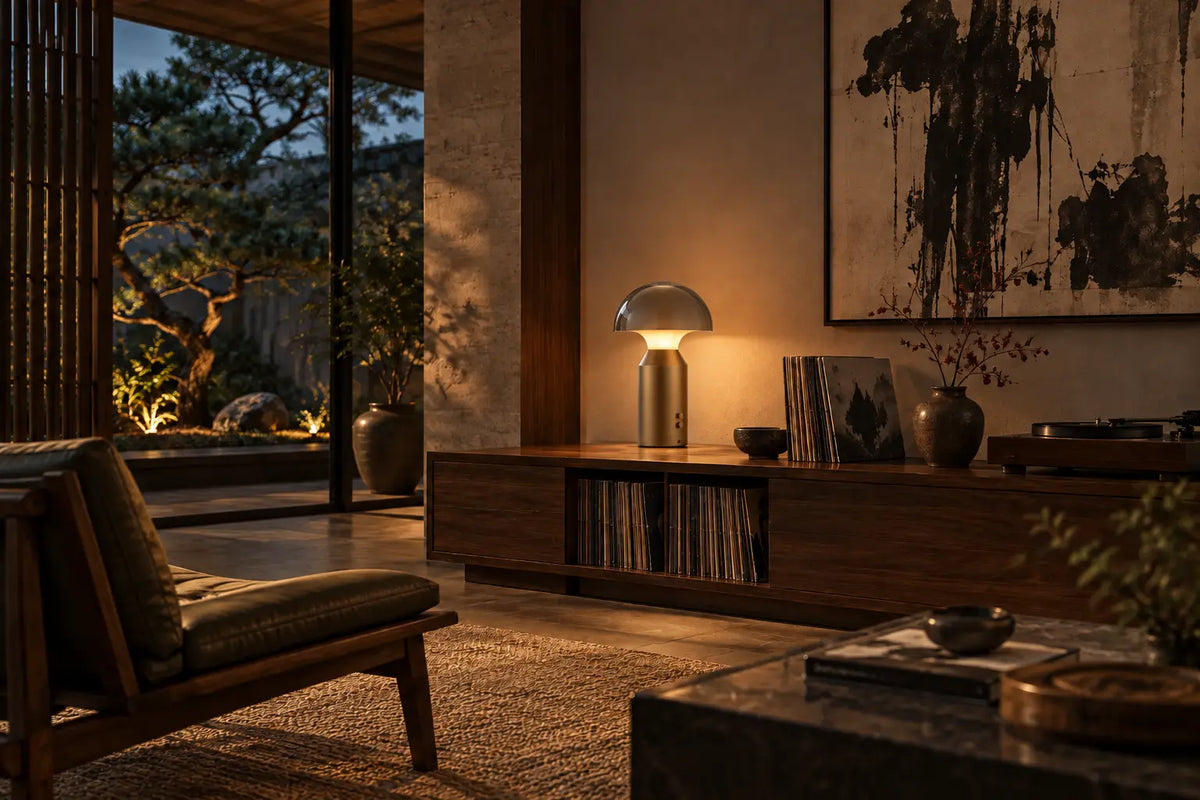

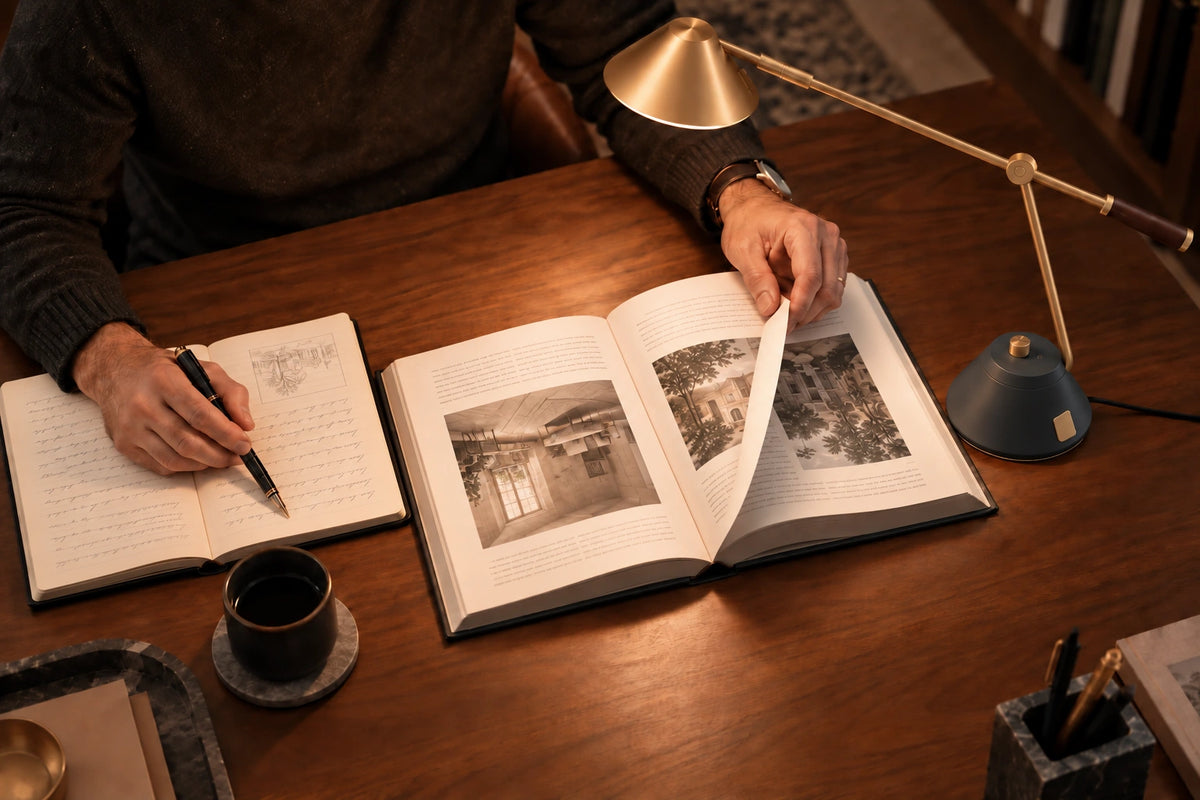
Sound is part of the environment your nervous system inhabits.
The brain continually judges whether a sound matters and requires attention. Start with context, rather than a universal focus frequency.
Read the evidence and boundaries ↗ 02 · Scent and neuroscience
Why can a scent recall a memory before words do?
Olfactory pathways are closely connected with networks involved in emotion and memory. This helps explain why a personally meaningful scent can feel so immediate.
Read the evidence and boundaries ↗ 03 · Biohacking and environment
Before adding another device, look at the room you use every day.
For people who work indoors, light timing, glare, noise, visual contrast and the boundary between day and evening are repeated daily exposures.
Read the evidence and boundaries ↗
01
Design lamps and task lighting
Form, glare, screen work, light at the eyes and performance on the real work surface.
Start here ↗
02
Biohacking and everyday rhythms
Measure your repeated daily environment before adding another intervention.
Look at the room ↗
03
Sound and attention
Why context and avoidable mental demands matter more than a magic frequency.
Understand sound ↗
04
Scent and memory
Why scent feels immediate, and why neuroscience is not proof of product efficacy.
Understand scent ↗What production hardware actually provides.
Only claim them when relevant product data exists.
Start with a question that matters to you.
For designers, people who work indoors, creators and readers who value evidence.
Design lamps
Design knowledge
A design lamp or adaptive task light? Compare more than the silhouette.
An attractive object may not suit long desk sessions. Compare form, distribution, glare, tasks, positioning and behavior across the day.
Read · 2 min ↗
Time and rhythm
Design knowledge
What is time-aware light?
Time-aware light considers where you are in the day, what you are doing, the light already at the actual task position and your stable preferences.
Read ↗
Time and rhythm
Expert consensus
The right light at the right time is more precise than healthy light.
Ask what light reaches the eyes, at what time and for how long, rather than whether a lamp is healthy.
Read · 2 min ↗
Measurement
Expert consensus
What does 250 lx melanopic EDI during the day actually mean?
It refers to light exposure on a vertical plane at the eyes for healthy adults, not a desk-illuminance target or a universal prescription.
Read · 2 min ↗
Work and screens
Practical guide
Why does a bright room still need task light at the desk?
Room brightness, light on the work surface and light on a face are different things. Task lighting manages their relationship.
Read · 2 min ↗
Video calls
Design knowledge
A video call is a lighting task, not just a camera setting.
Creator-lighting experience comes to the desk: shape the face, retain skin tones, create a catchlight and separate the person from the background.
Read · 2 min ↗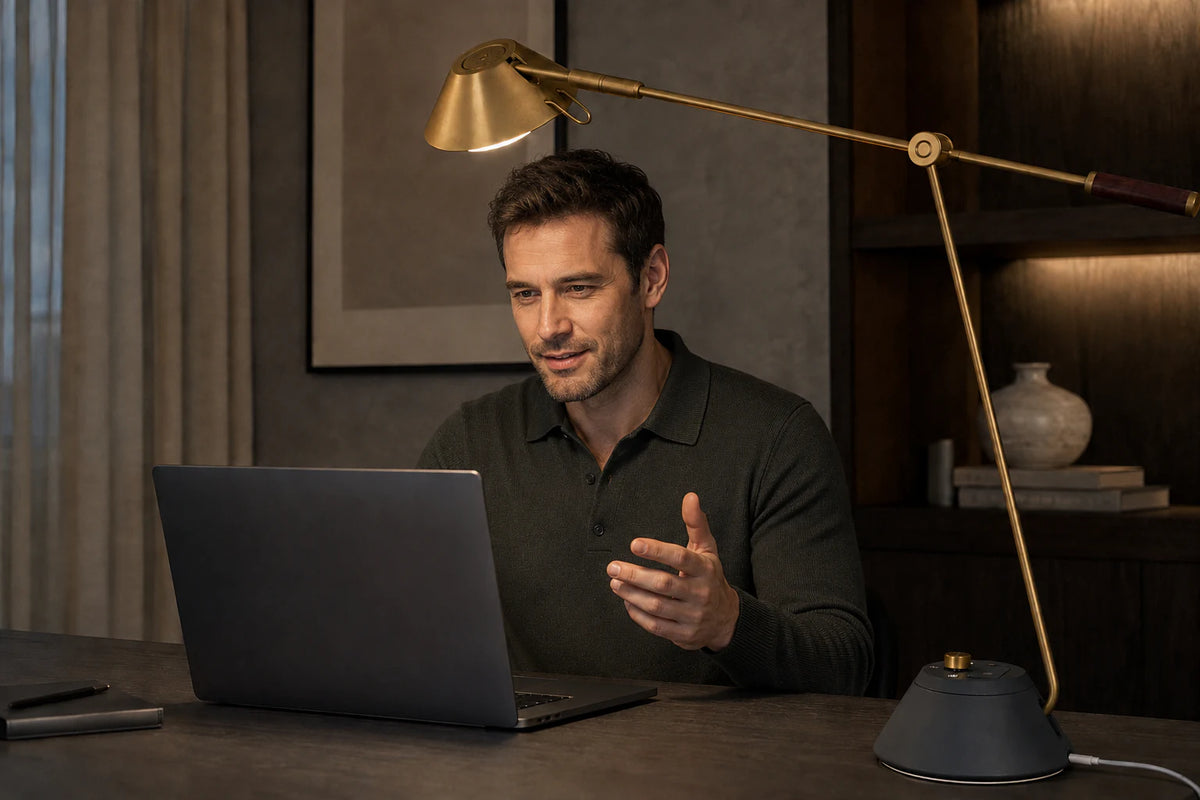
Individual differences
Research question
Why can age change the starting point for lighting?
Lens transmission and pupil size change over time. The same room light can produce different retinal stimulation.
Read · 2 min ↗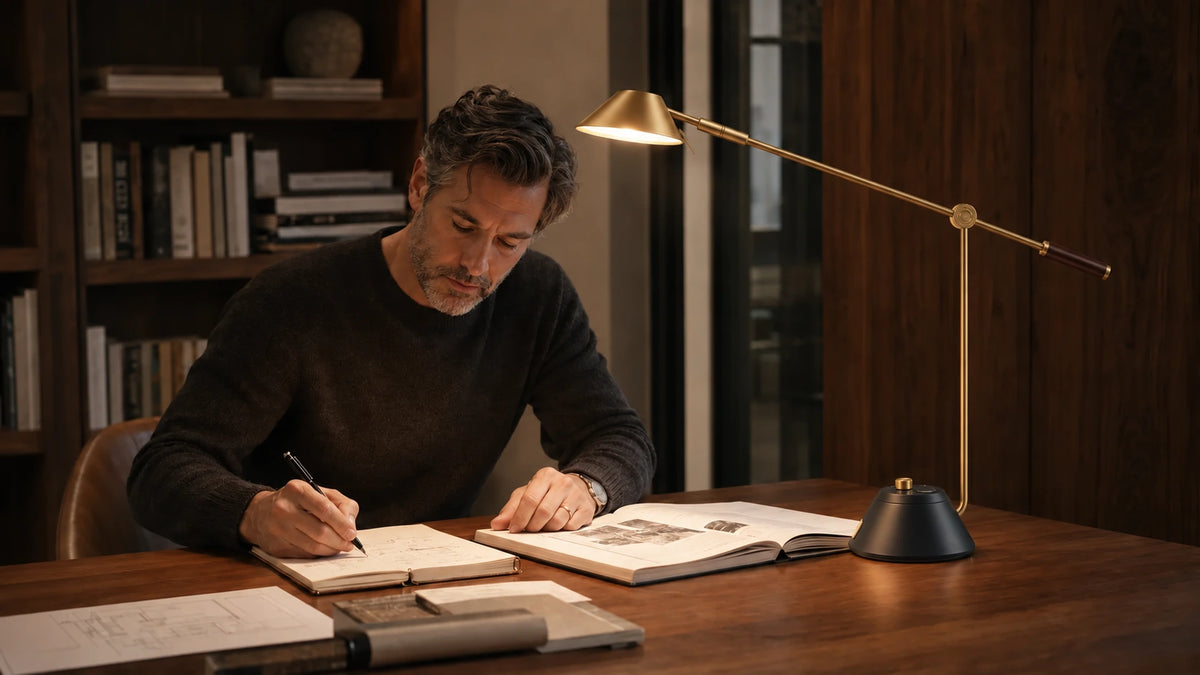
Late-night work
Design knowledge
Late work should not silently turn the room back into daytime.
Visibility still matters when work continues at 23:30, but the lighting state should remain distinct from daytime focus.
Read · 2 min ↗
Sound and neuroscience
Research overview
Sound is part of the environment your nervous system inhabits.
The brain continually judges whether a sound matters and requires attention. Start with context, rather than a universal focus frequency.
Read · 2 min ↗
Scent and neuroscience
Research overview
Why can a scent recall a memory before words do?
Olfactory pathways are closely connected with networks involved in emotion and memory. This helps explain why a personally meaningful scent can feel so immediate.
Read · 2 min ↗
Biohacking and environment
Practical guide
Before adding another device, look at the room you use every day.
For people who work indoors, light timing, glare, noise, visual contrast and the boundary between day and evening are repeated daily exposures.
Read · 2 min ↗
Measurement
Validated method
Why calibrate a real desk?
Lamp output is not the same as light at the actual working position.
Explore the method ↗