A design lamp or adaptive task light? Compare more than the silhouette.
July 27, 2026 · Updated October 29, 2026 · 2 min read · Harlowelife research and product team
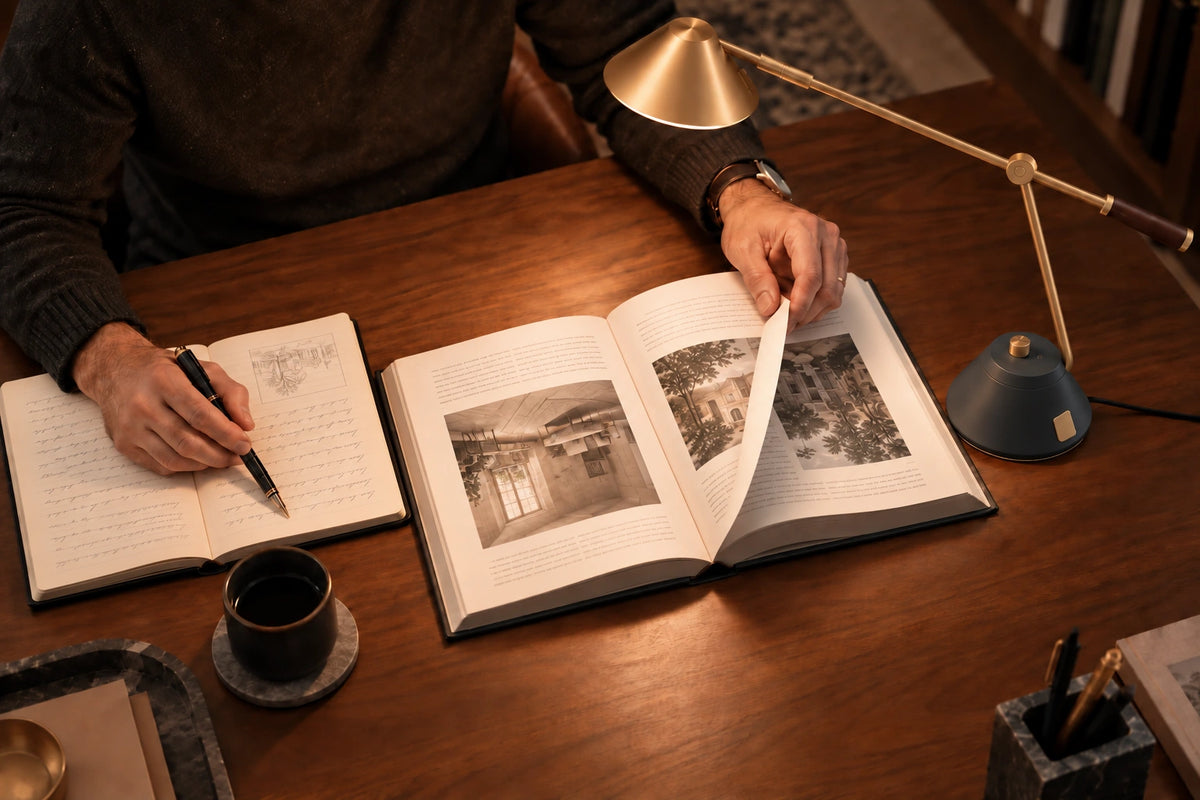
The key point
An attractive lamp may not suit long desk sessions. Compare form, light distribution, glare, changing tasks, placement and behavior across the day.
Design and performance belong in the same conversation. Ask whether the object belongs in the room and whether its light serves the person using it.
The object and the light are two design questions
Design lamps are often judged like furniture or sculpture, while task lights can be reduced to an illuminance number. Neither perspective is sufficient for a light used eight to ten hours a day.
Consider form, comfort when viewing the emitting surface, distribution across the real work area, screen reflections, adjustment, controls and changes from day to evening.
Choose a form for the room and working area
A fixed desk often suits a compact, adjustable light close to the task. A height-adjustable desk or larger area may call for another geometry that remains effective as the surface moves.
SOLA Desk is intended for a defined, fixed-height desk. Choose it according to the actual surface, placement and reach you need.
Evidence boundary
A design framework does not replace final optical data, ergonomic fit or experience in a real room.
Practical questions
What should I look for in a design table lamp?
Alongside appearance, consider emitting-surface comfort, glare, screen reflections, real work-area coverage, adjustment, controls, materials and changes through the day.
What matters for a height-adjustable desk?
The work area and adjustment geometry matter. Consider how the light stays positioned as the surface moves, how much room it occupies and whether it covers the task.