What does “250 lx melanopic EDI in daytime” actually mean?
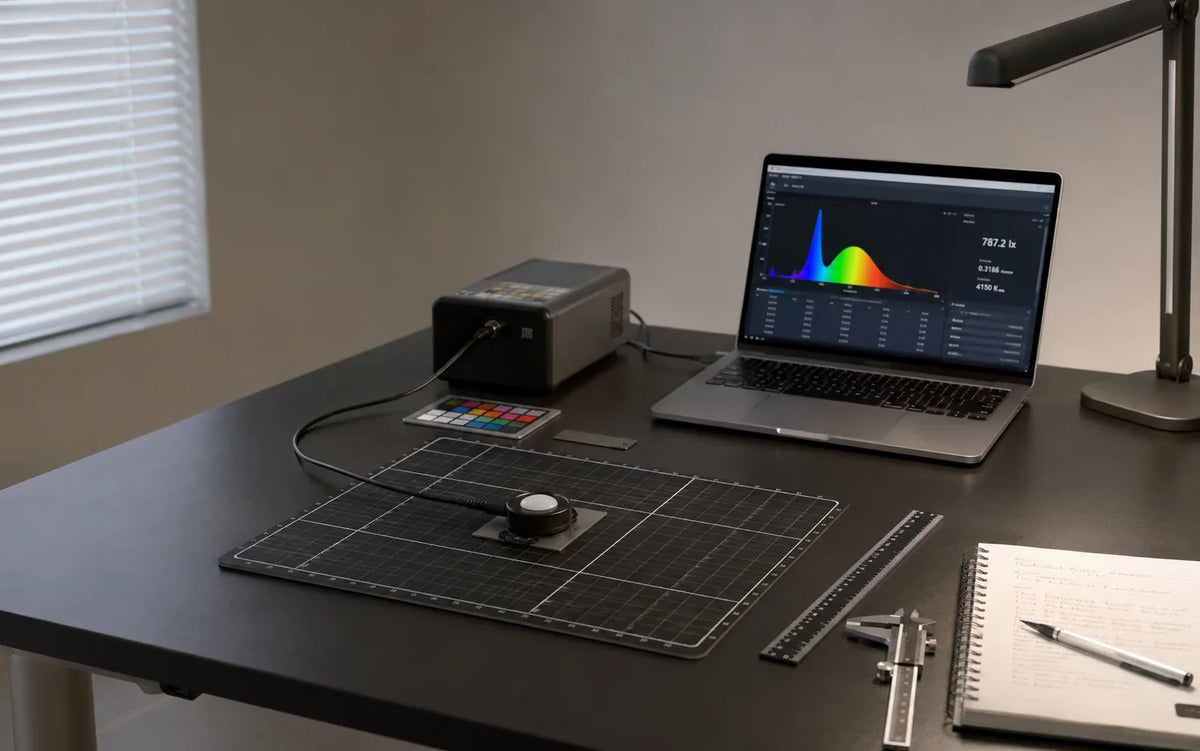
Editorial illustration. Product behavior and final measurements remain subject to engineering validation.
The short answer
It is an eye-level exposure recommendation for healthy adults - not a desktop lux target and not a universal prescription.
Circadian-relevant exposure is measured vertically at the eye. Task visibility is usually assessed on the work surface. A serious lighting system needs both views.
Do not confuse two measurement planes
The expert recommendation describes melanopic EDI at the eye in a vertical plane. A desk-light specification commonly reports horizontal illuminance on a work surface. Both are useful, but they answer different questions.
This is why Harlowelife plans to publish work-surface distribution and eye-level estimates separately rather than turn one lux figure into a complete product story.
A recommendation is a starting point
The underlying consensus focuses on a healthy daily pattern for healthy adults. The CIE continues to identify open questions, including how recommendations translate across age, health status, lifestyle and diverse populations.
What this does not prove
The evidence boundary
The recommendation is not a promise that reaching one number causes a specific health benefit. Individual response, prior light exposure, timing and duration still matter.