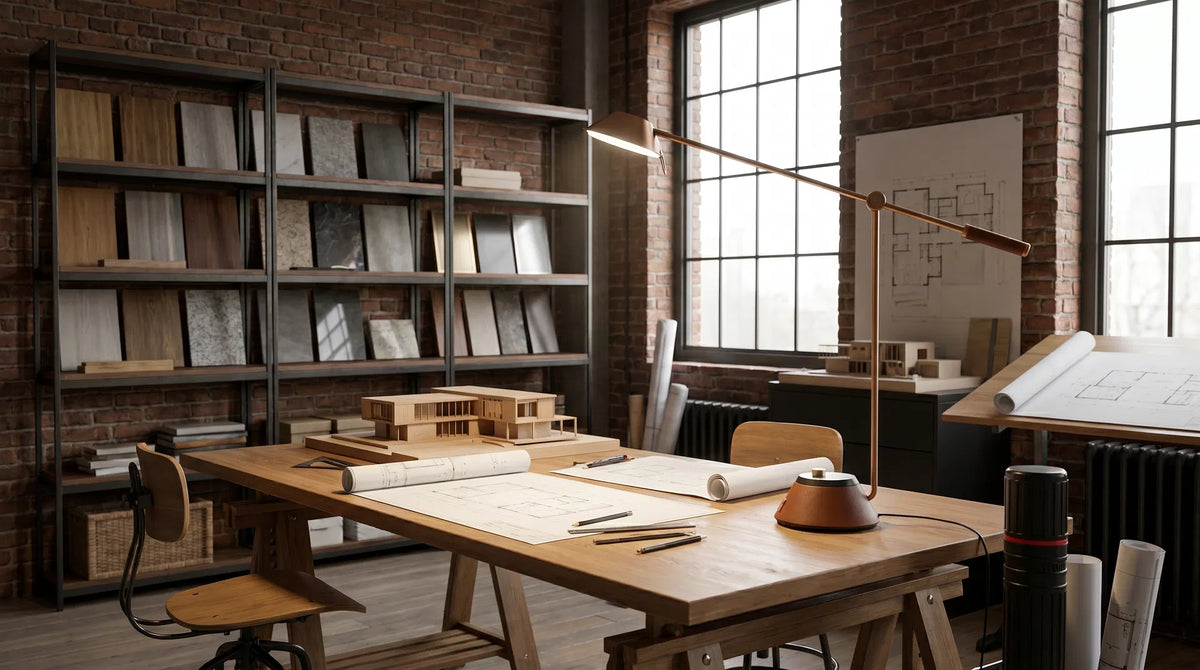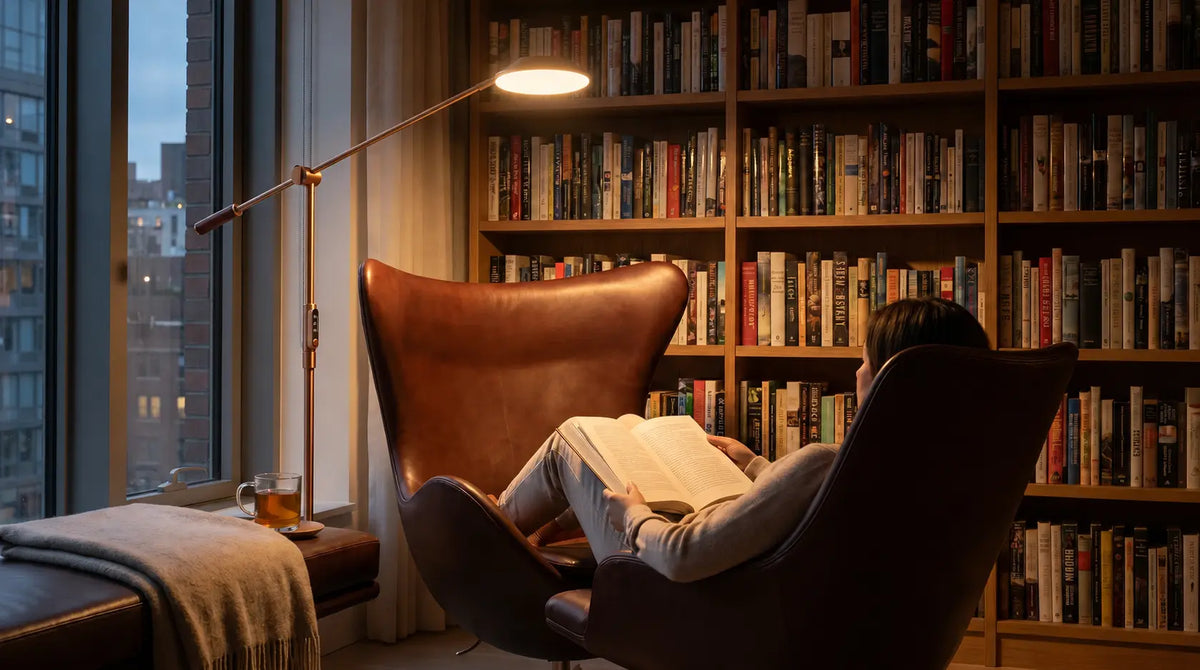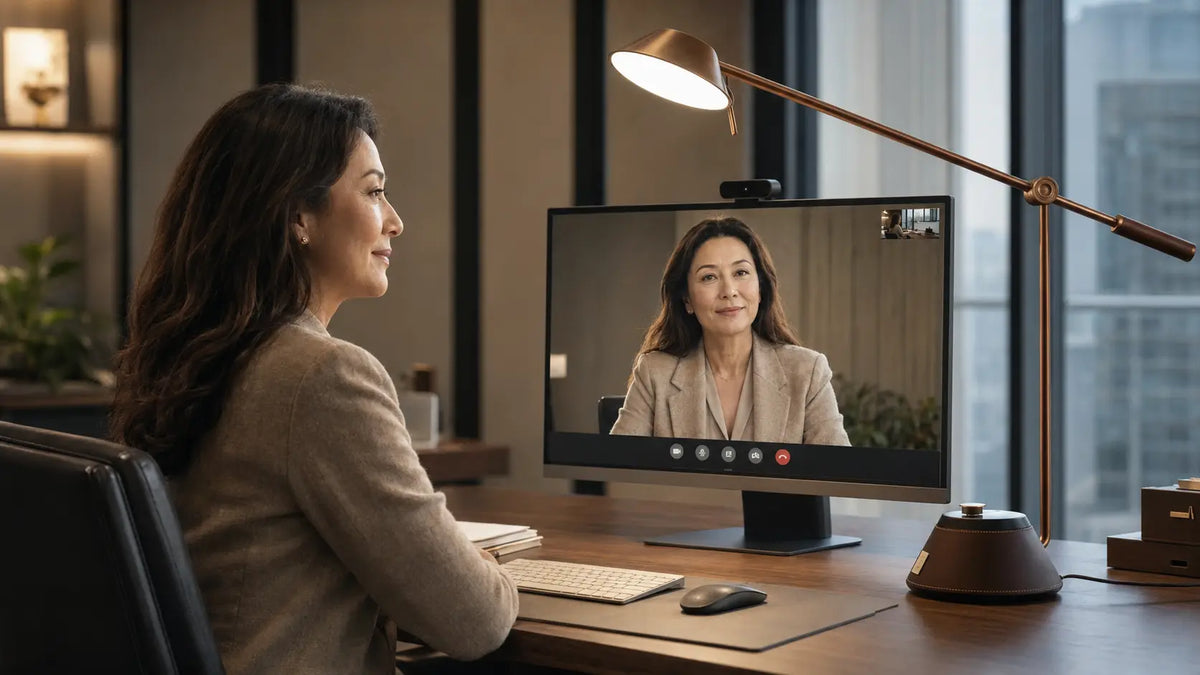
A video call is a lighting task, not merely a camera setting.
Editorial illustration. Product behavior and final measurements remain subject to engineering validation.
The short answer
Harlowe’s creator-light experience becomes useful at the everyday desk: shape the face, preserve natural skin tone, create an eye light and separate the person from the background.
Before an important call, manually direct Anchor or Axis toward the face as a controlled key light, then balance it against the screen and room.
From creator light to living light
A ceiling light can make the eye sockets dark. A bright window behind the user can force the camera to underexpose the face. A small frontal source can look flat or harsh. Creator lighting solves these as relationships between direction, source size, contrast and color - not as one brightness number.
For a video call, Anchor or Axis can be manually repositioned toward the face before the meeting. The goal is a clean, flattering key direction with enough softness for skin, a visible catchlight in the eyes and controlled separation from the background. After the call, it returns to the desk task.
Why this is a genuine Harlowe advantage
Most task-light brands begin with desk illumination. Harlowe begins with years of lighting people and objects for cameras. Harlowelife carries that competence into two daily work-light forms that serve both the work surface and the person appearing on screen: Anchor for a fixed-height primary desk, and Axis for a sit-stand desk or broader work area.
What this does not prove
The evidence boundary
“Broadcast-style” describes a lighting technique and visual intention. It is not a guaranteed appearance: camera, lens, exposure, room, skin tone, placement and ambient daylight all affect the result.