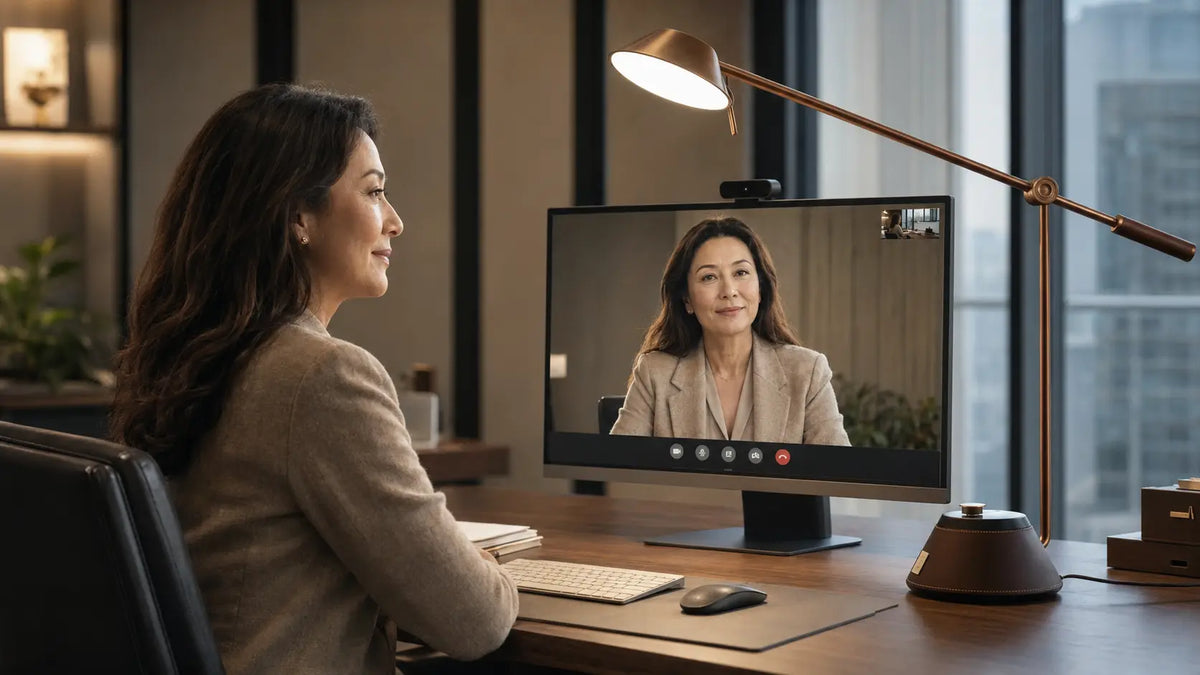
Why age changes the useful starting point for light.
Editorial illustration. Product behavior and final measurements remain subject to engineering validation.
The short answer
The eye does not remain optically identical across adulthood. Lens transmission and pupil size can change the retinal stimulus produced by the same room light.
Age range can inform an initial recommendation, but repeated stable preference should be allowed to refine it.
The same fixture does not create the same retinal exposure
Research has examined how age-related changes in lens transmittance and pupil size alter the light reaching the retina. This supports treating age as useful context rather than assuming one universal default.
It does not justify a simplistic rule that every older user needs maximum output. A recommendation should remain adjustable, transparent and resettable.
What this does not prove
The evidence boundary
Age is not a diagnosis and should not mechanically increase brightness. Glare sensitivity, eye conditions, medication and individual preference require separate consideration.