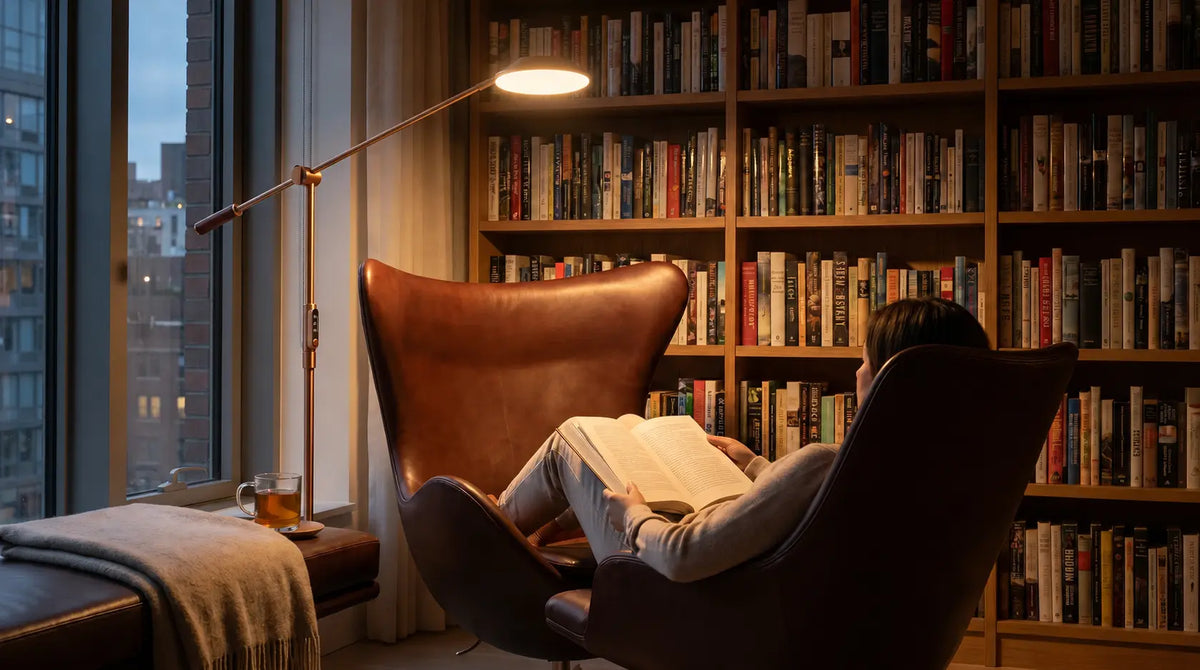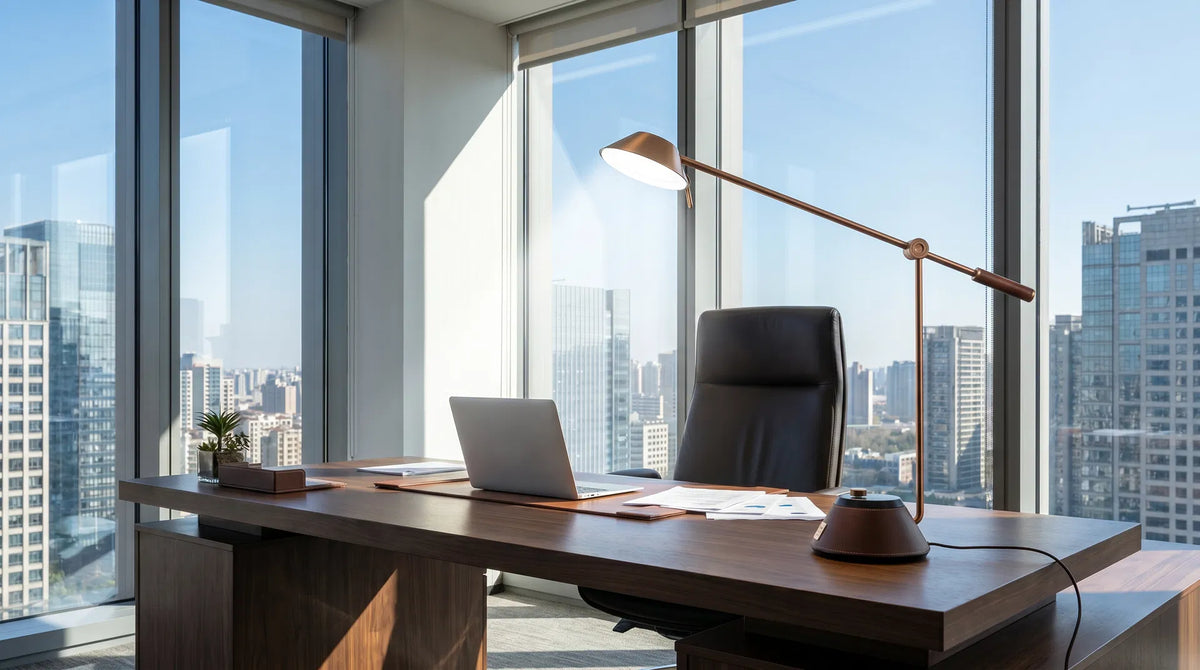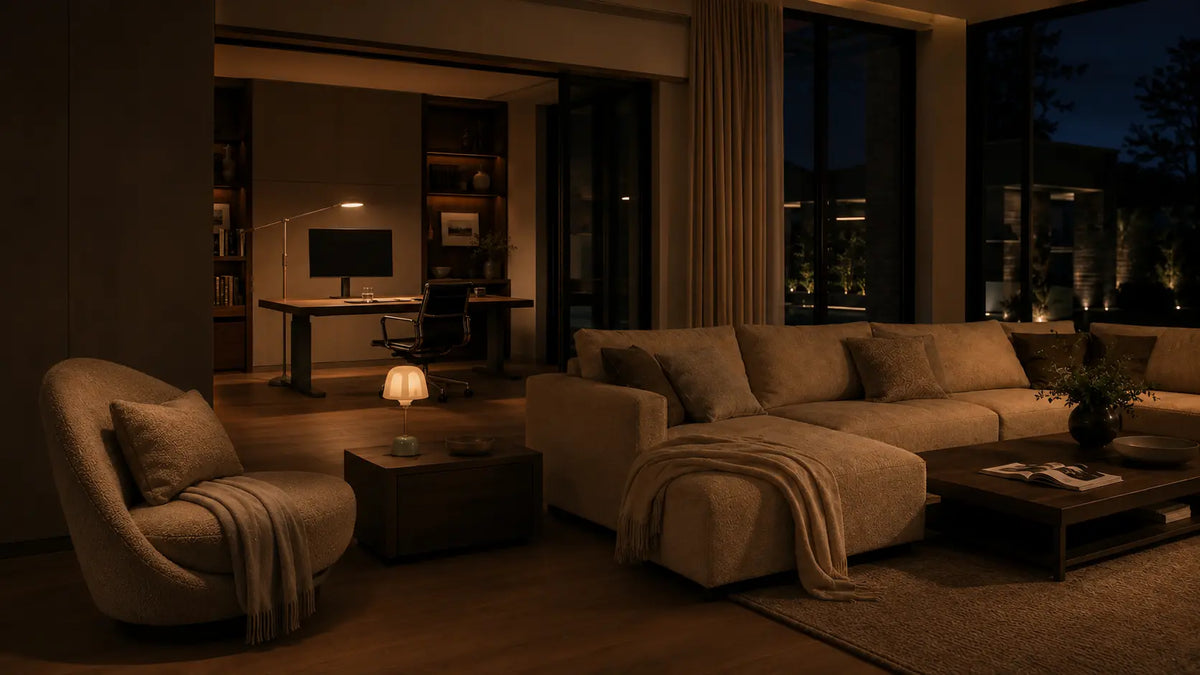
Late work should not quietly turn the room back into daytime.
Editorial illustration. Product behavior and final measurements remain subject to engineering validation.
The short answer
If someone chooses to work for two more hours at 11:30 p.m., visibility still matters - but the state should remain explicitly different from daytime focus.
A late-work state should preserve task visibility while limiting the spectral and intensity shift that would make the whole room feel like full daytime.
Name the compromise honestly
Calling a late-night state “Daytime Focus” creates a contradiction between the label and the intended light strategy. Harlowelife separates “Night · Extended Work” so the user can understand that the system is preserving visibility without pretending the time of day has not changed.
The final spectral curve, brightness limits and transition behavior remain engineering targets until measured on production hardware.
What this does not prove
The evidence boundary
A protective late-work strategy cannot erase the biological effect of staying awake or of evening light exposure. It is a compromise state, not a health claim.