Article: Designer lamp or adaptive task light? A better way to compare.
Designer lamp or adaptive task light? A better way to compare.
Editorial illustration. Product behavior and final measurements remain subject to engineering validation.
The short answer
A lamp can be visually beautiful yet poorly matched to long desk work. Compare form, light distribution, glare, task flexibility, placement and behavior across the day.
Do not choose between design and performance. Ask whether the object belongs in the room and whether the light works for the person using it.
The object and the light are two design problems
Designer lighting is often judged first as furniture or sculpture. Task lighting is often reduced to a lux number. Neither view is enough for a lamp used eight or ten hours a day.
Compare the visible object, the apparent size and softness of the emitting surface, distribution across the real work area, reflections on the display, adjustment range, controls and how the setting changes from day to evening.
Choose for the room and the work zone
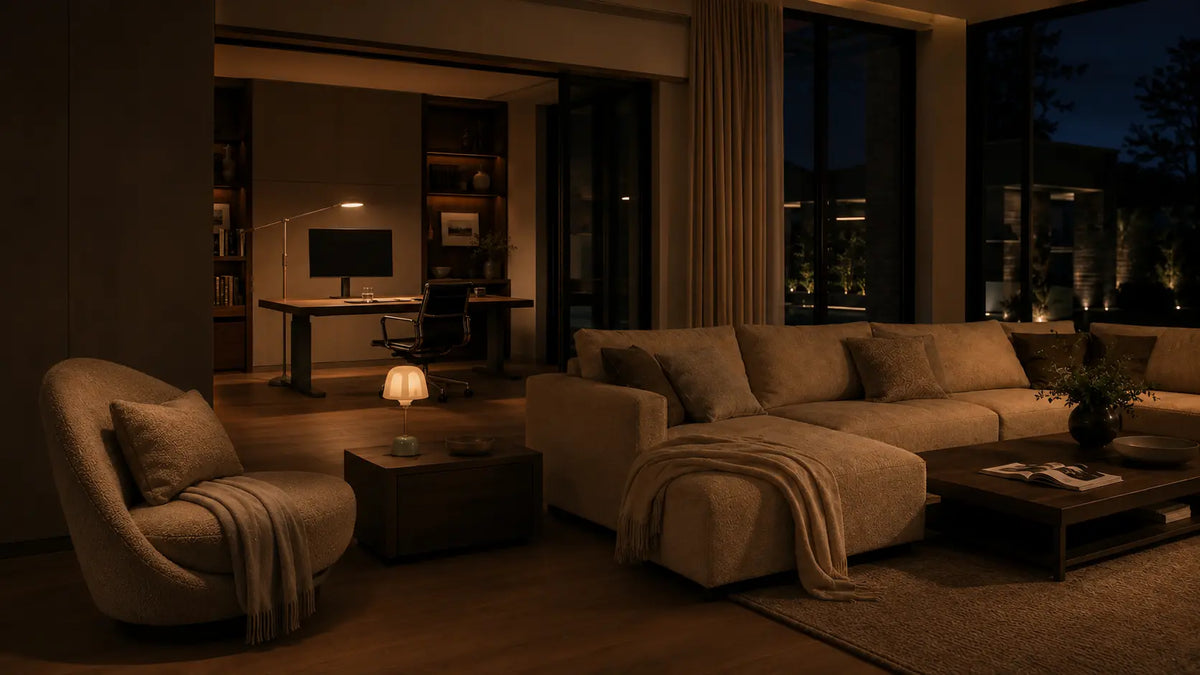
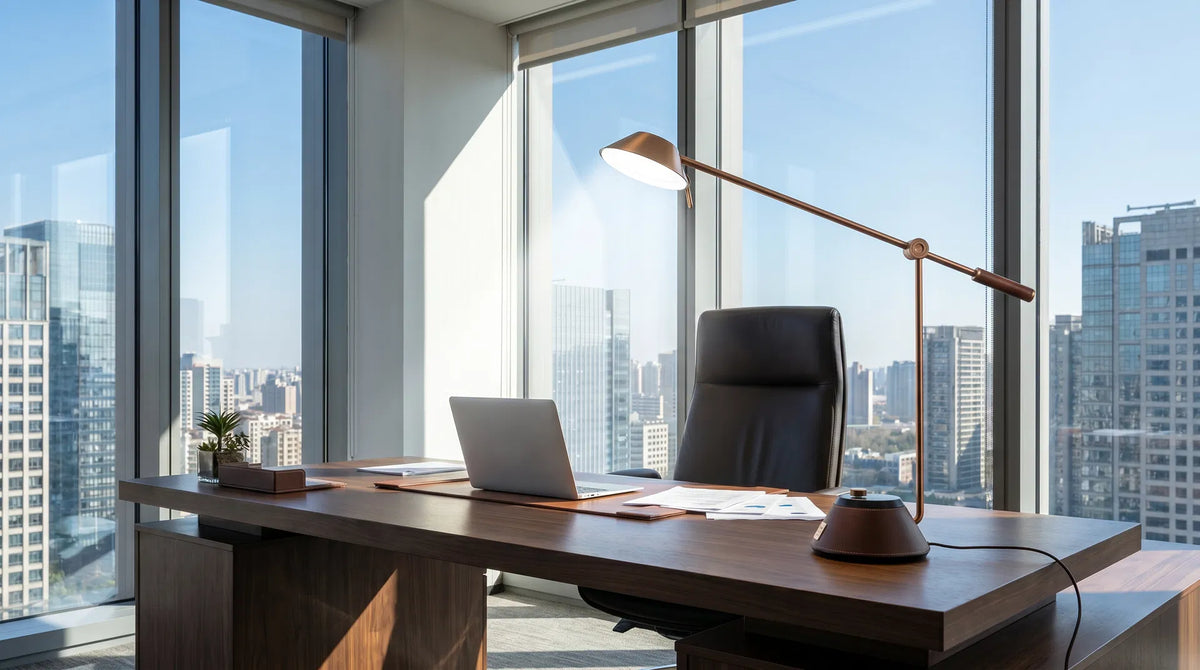
A fixed desk usually benefits from a compact, adjustable light close to the task. A sit-stand desk or larger work zone may need a floor-standing source that does not consume the desktop and maintains useful geometry as the desk moves.
That is the reason Harlowelife offers two forms rather than treating one lamp as universal: Anchor for a defined fixed desk, Axis for a broader or height-changing work area.
What this does not prove
The evidence boundary
A design framework is not a substitute for final photometric data, ergonomic fit or seeing a product in the intended room.
Questions people ask
Practical questions
What should I look for in a designer desk lamp?
Look beyond appearance: consider emitting-surface comfort, glare, reflections, real work-area coverage, adjustment, controls, materials and how the light behaves from daytime into evening.
Should a sit-stand desk use a desk lamp or floor lamp?
It depends on the work area and adjustment geometry. A floor-standing task light can keep the desktop clear and support a broader zone, while a compact desk light can be more direct and flexible on a fixed desk.