Before adding another biohacking device, audit the room you already spend all day in.
Editorial illustration. Product behavior and final measurements remain subject to engineering validation.
The short answer
For most knowledge workers, light timing, glare, noise, visual contrast and evening boundaries are higher-frequency exposures than an occasional protocol.
Treat the room as a system: measure what can be measured, change one variable at a time, and separate a felt preference from a demonstrated health outcome.
The best biohack may be less theatrical
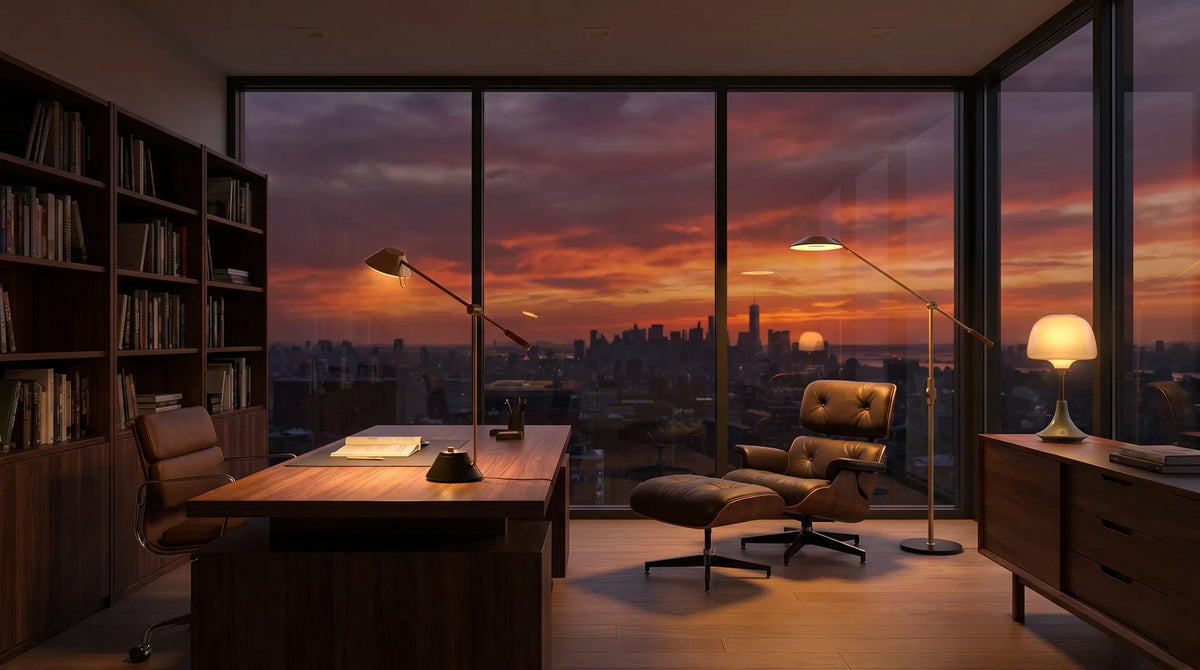
A productive self-experiment starts with repeated exposure. Ask what reaches the eyes across the day, whether the screen reflects bright sources, how much speech and noise compete for attention, and whether the room stays in a daytime state late into the evening.
These variables are not glamorous, but they are present for hours. Correcting the environment can be more coherent than stacking devices while leaving the daily room unchanged.
Use a three-layer audit
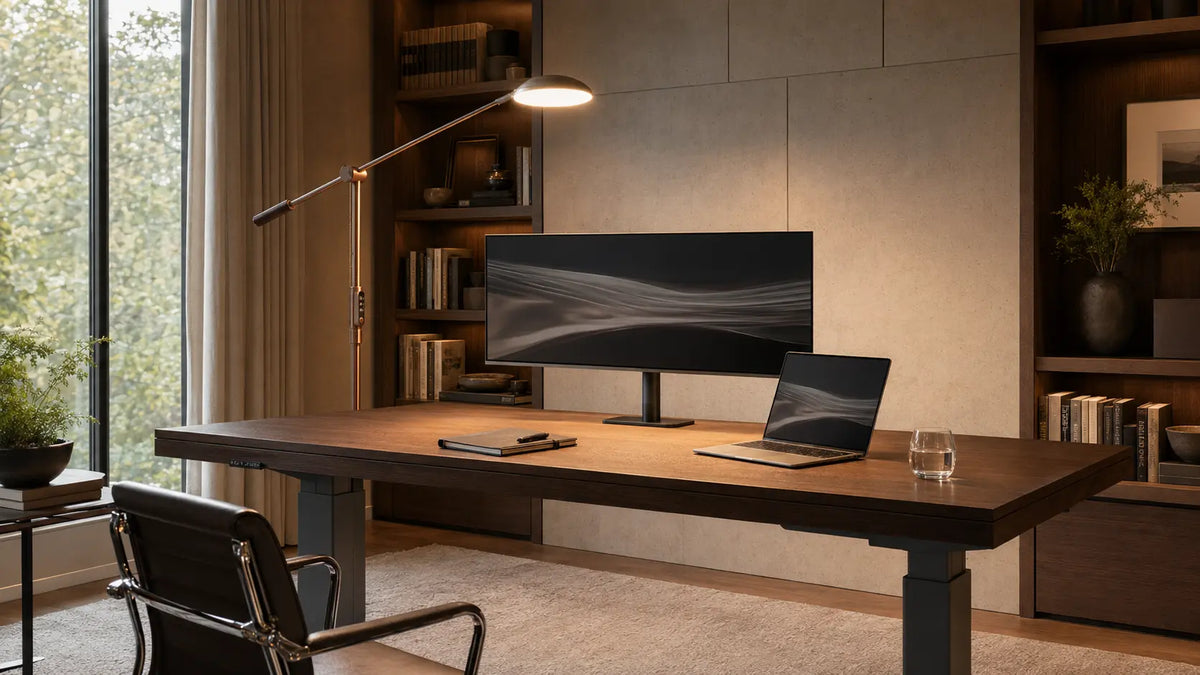
First, visibility: can you see the keyboard, page and face without glare or extreme contrast? Second, timing: does daytime feel clearly different from the hours before bed? Third, attention: which sounds, notifications and odors are useful cues, and which create additional demand?
Change one layer at a time and record a practical outcome such as comfort, task completion or adherence to a wind-down routine. Do not turn a subjective improvement into a biological claim without appropriate measurement.
Where Harlowelife fits
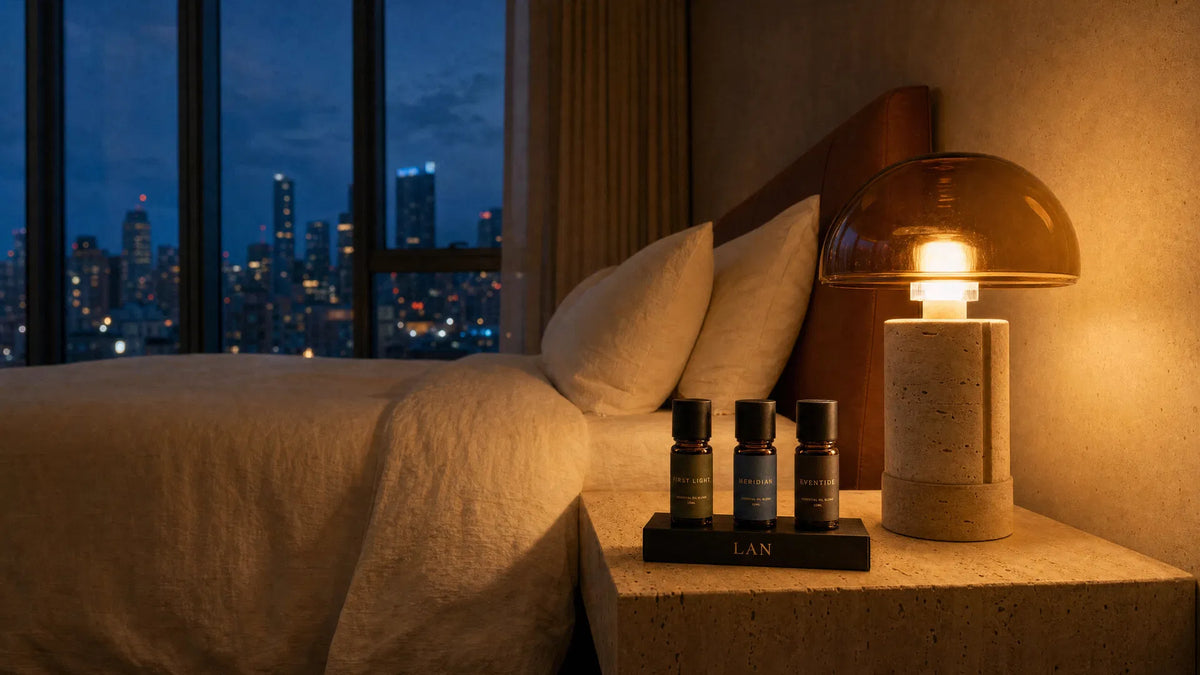
Anchor and Axis begin with time-aware task light and guided work-surface calibration. Ritual One extends the roadmap into coordinated room-scale light and sound. Vela and Ember explore scent as a deliberate cue for memory and ritual. They are stages of one environment idea, not a required bundle.
What this does not prove
The evidence boundary
Environmental design can support comfort, visibility and routines. It does not diagnose a condition, replace medical care or guarantee higher performance, better sleep or longer life.
Questions people ask
Practical questions
What should I optimize first in a home office?
Begin with visibility and glare, then daily light timing, then distracting noise and interruptions. These are repeated exposures and can be checked without claiming a medical effect.
Is Harlowelife a biohacking brand?
Harlowelife builds design-led personal environments. Biohackers may value its measurement, timing and controllability, but the brand does not promise quantified-self outcomes without product-specific evidence.